Home - Blogs - 3/4 Plywood vs 5/8 Plywood: Which One Should You Choose?
3/4 Plywood vs 5/8 Plywood: Which One Should You Choose?
When deciding between 3/4 plywood and 5/8 plywood, understanding their differences in strength, durability, and uses is crucial. Both are commonly used in construction, furniture, and cabinetry, but each thickness has its advantages depending on the project.
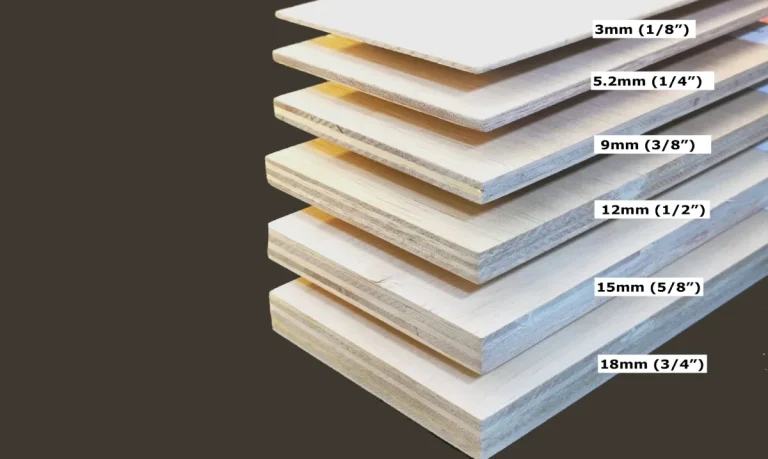
What is the Difference in Thickness Between 3/4 Plywood and 5/8 Plywood?
The main difference between 3/4 plywood and 5/8 plywood lies in their thickness:
3/4 plywood is 0.75 inches (approximately 19mm) thick.
5/8 plywood is 0.625 inches (approximately 16mm) thick.
While the difference may seem small, the added thickness of 3/4 plywood results in increased strength and durability compared to 5/8 plywood.
Strength and Durability: Which is Stronger?
3/4 plywood is stronger than 5/8 plywood due to its greater thickness. The additional 1/8-inch thickness allows 3/4 plywood to support heavier loads, making it suitable for high-stress applications. 5/8 plywood, while still strong, is better for medium-duty use.
Strength Comparison:
3/4 plywood: Ideal for heavy-duty applications like flooring, structural support, and cabinetry where high weight-bearing is needed.
5/8 plywood: Suitable for lighter applications, such as wall sheathing or furniture that doesn’t require as much load resistance.
How Do 3/4 Plywood and 5/8 Plywood Compare in Cost?
Typically, 5/8 plywood is less expensive than 3/4 plywood due to the reduced material and manufacturing costs. However, the cost difference is generally modest. Prices for each can vary based on the wood type and grade:
3/4 plywood: $30 – $70 per sheet, depending on the wood and grade.
5/8 plywood: $25 – $60 per sheet, making it a more budget-friendly option.
What Are the Common Uses for 3/4 Plywood vs 5/8 Plywood?
Both 3/4 plywood and 5/8 plywood are used in different ways depending on the strength and weight requirements of the project:
3/4 Plywood:
Flooring: Provides a solid, durable subfloor.
Structural framing: Used for walls, roofs, and heavy-duty construction applications.
Cabinetry: Ideal for cabinet boxes, shelves, and structural components requiring high durability.
5/8 Plywood:
Wall sheathing: Perfect for exterior walls, where it offers moderate strength and a balance between weight and cost.
Furniture: Often used for lighter furniture projects where strength is important but doesn’t need to support heavy loads.
Paneling: Suitable for interior paneling applications.
Weight Comparison: How Much Do They Weigh?
The weight difference between 3/4 plywood and 5/8 plywood is noticeable:
Plywood Thickness
Approximate Weight (per 4×8 sheet)
3/4 inch
45-60 lbs (20.4-27.2 kg)
5/8 inch
35-50 lbs (15.9-22.7 kg)
Due to its thinner profile, 5/8 plywood is lighter and easier to handle than 3/4 plywood, making it a good choice for projects requiring a lighter material.
Is 3/4 Plywood More Expensive Than 5/8 Plywood?
Yes, 3/4 plywood is generally more expensive than 5/8 plywood due to its thicker construction and superior strength. If your project doesn’t require the added durability of 3/4 plywood, 5/8 plywood can be a more cost-effective alternative without sacrificing too much strength.
Which One is More Flexible?
In terms of flexibility, 5/8 plywood is slightly more flexible than 3/4 plywood due to its thinner construction. This can be both an advantage and a disadvantage depending on your project. For instance, 5/8 plywood might be more suitable for projects where some flexibility is needed (e.g., certain curved applications), but for those requiring rigidity, 3/4 plywood would be preferable.
When Should You Choose 3/4 Plywood Over 5/8 Plywood?
Opt for 3/4 plywood when:
Your project involves high load-bearing requirements (e.g., heavy furniture or subflooring).
Durability and strength are top priorities, particularly in structural or outdoor applications.
You need a plywood with minimal flexibility and maximum rigidity.
When Should You Choose 5/8 Plywood Over 3/4 Plywood?
Choose 5/8 plywood when:
You want a more affordable option without compromising too much on strength.
The project requires medium-strength material (e.g., wall sheathing, furniture).
You’re dealing with lighter applications or need to save on weight.
Conclusion
In summary, 3/4 plywood is stronger and more durable than 5/8 plywood, making it ideal for heavy-duty construction, subflooring, and structural applications. 5/8 plywood, on the other hand, offers a more cost-effective and lightweight alternative for projects requiring moderate strength, such as furniture, paneling, and wall sheathing. The choice between the two will depend on your project’s specific strength, cost, and weight requirements.

 Skip to content