
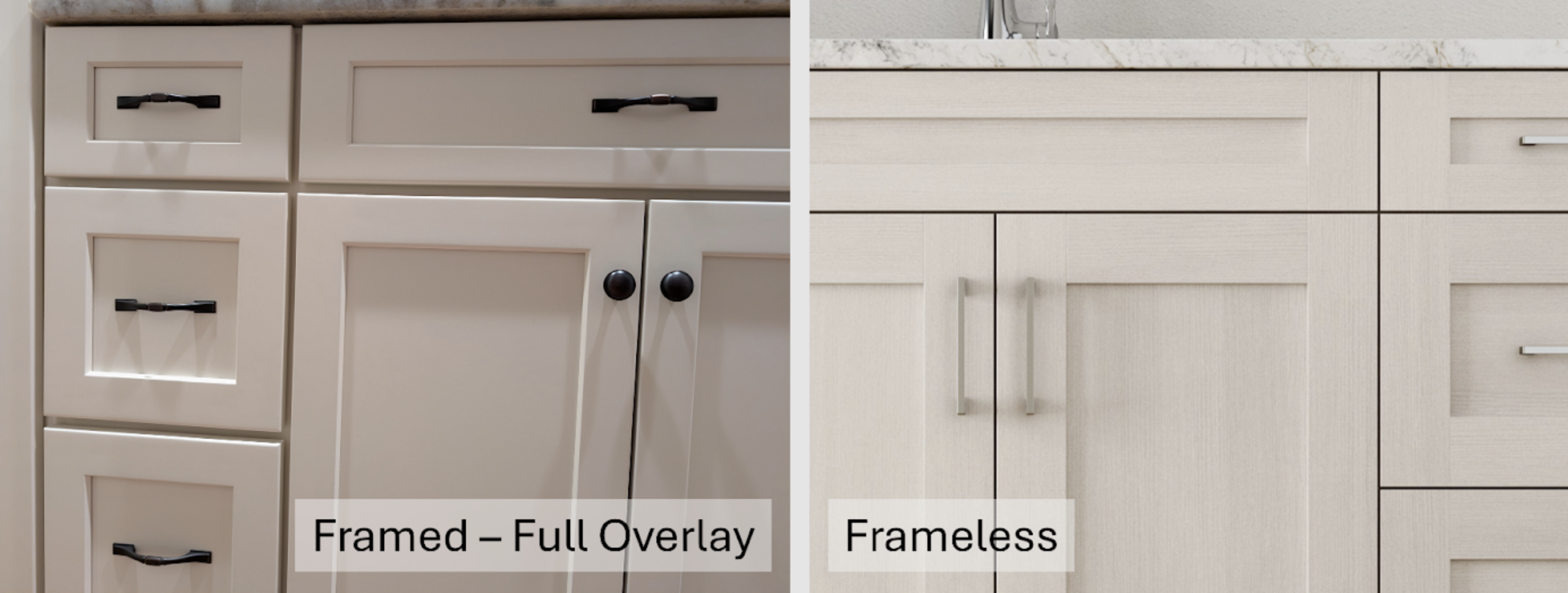
Frameless vs. Full Overlay Cabinets: A Comprehensive Guide
If you’re planning to upgrade your kitchen or designing a new one from scratch, one of the most important decisions you’ll make is choosing the right cabinet construction.
Cabinets don’t just impact storage they define the look, feel, and long-term durability of your kitchen.
Among the most popular options today are frameless cabinets and full overlay cabinets. While they may look similar at first glance, they are built differently and perform differently in real-world use.
This guide will help you understand:
- The real difference between frameless and full overlay cabinets
- Which option is better for your kitchen style and needs
- And how to choose based on durability, cost, and functionality
Understanding Cabinet Construction
Before comparing the two, it’s important to clarify something many homeowners confuse:
Frameless vs Full Overlay is not a direct one-to-one comparison
Here’s why:
- Frameless cabinets = a type of cabinet construction (no face frame)
- Full overlay = a door style used on framed cabinets
This distinction matters because it affects:
- Durability
- Storage space
- Installation
- Overall design flexibility
What Are Frameless Cabinets?
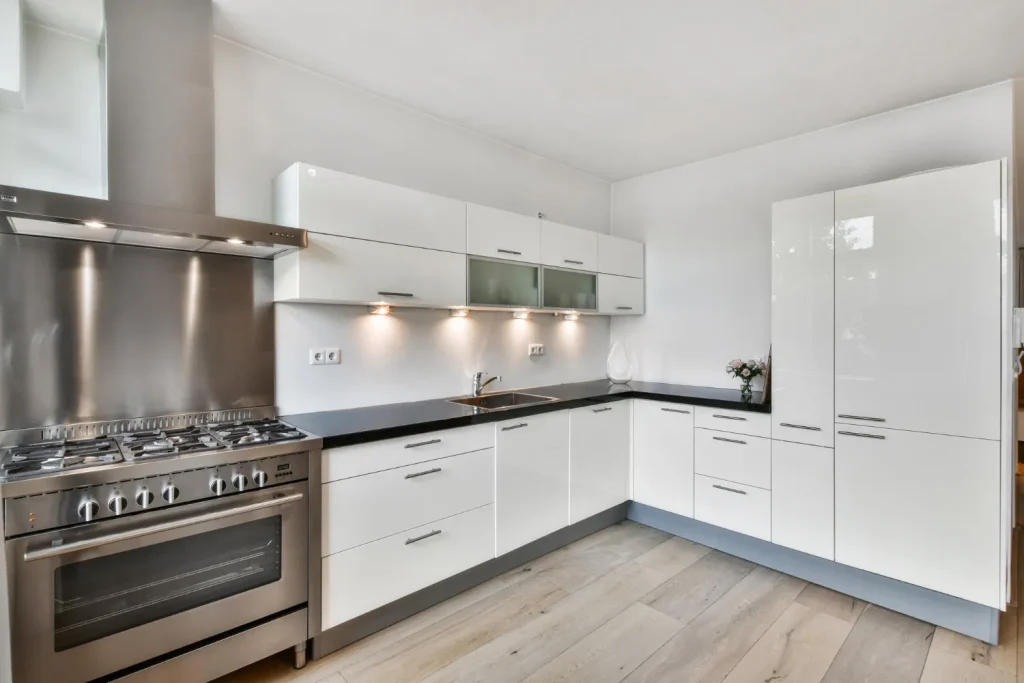 Frameless Cabinets
Frameless cabinets, often called European-style cabinets, are built without a front face frame. The doors attach directly to the cabinet box, creating a sleek and seamless appearance.
This construction allows for:
- Wider cabinet openings
- Easier access to storage
- A clean, modern aesthetic
Because there is no frame blocking the opening, you get slightly more usable space something that becomes noticeable in smaller kitchens.
Pros of Frameless Cabinets
Frameless cabinets are known for their minimalist appeal and functional advantages. They create a modern look that works especially well in contemporary kitchens, and the wider openings make it easier to store larger items like pots, pans, and serving trays.
They also offer more flexibility in interior organization, which is a major advantage if storage efficiency is a priority.
Cons of Frameless Cabinets
The main drawback is durability. Without a face frame, the cabinet structure relies entirely on the box itself, which means it can be slightly less rigid compared to framed cabinets.
They also tend to be more expensive and require more precise installation to ensure proper alignment.
What Are Full Overlay Cabinets?
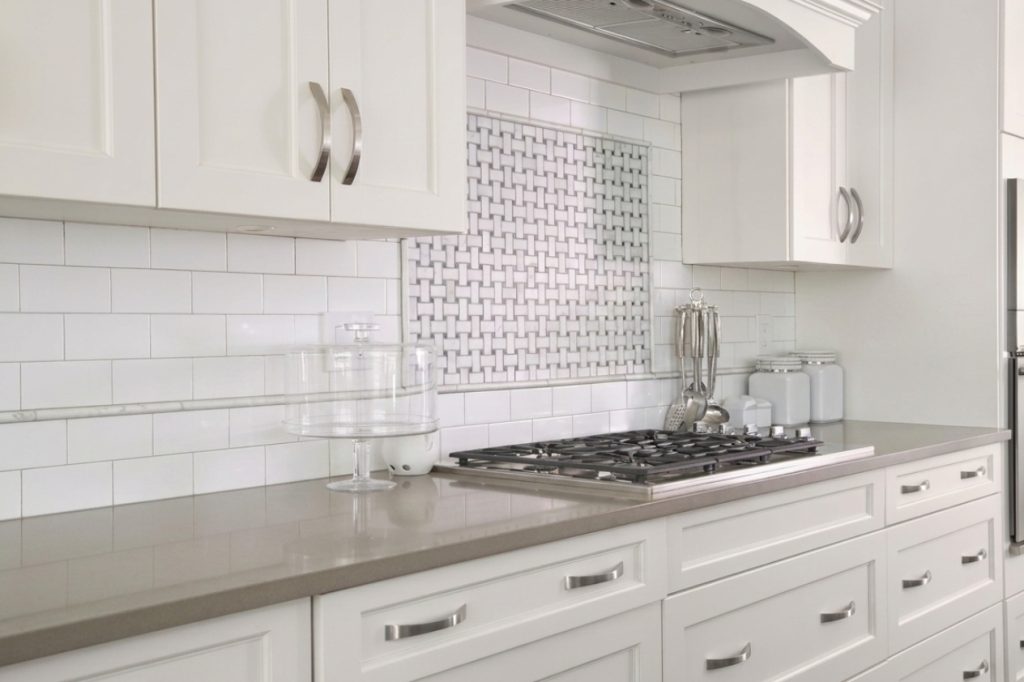 Full Overlay Cabinets
Full overlay cabinets are a type of framed cabinet construction where the doors and drawers cover almost the entire face frame, leaving only a very small gap (called a reveal).
This creates a smooth, continuous look while still maintaining the strength of a traditional frame.
Full overlay is one of three main overlay types:
- Partial overlay (more frame visible)
- Full overlay (minimal frame visible)
- Inset (door sits inside the frame)
Pros of Full Overlay Cabinets
Full overlay cabinets strike a balance between style and strength. The face frame provides extra structural support, making them more durable over time.
They also offer a clean, high-end appearance that works in both traditional and modern kitchens.
Cons of Full Overlay Cabinets
Because of the frame, there is slightly less interior space compared to frameless cabinets. They also require hardware like handles or pulls, since there’s minimal space to grip the doors.
Frameless vs Full Overlay Cabinets: Key Differences
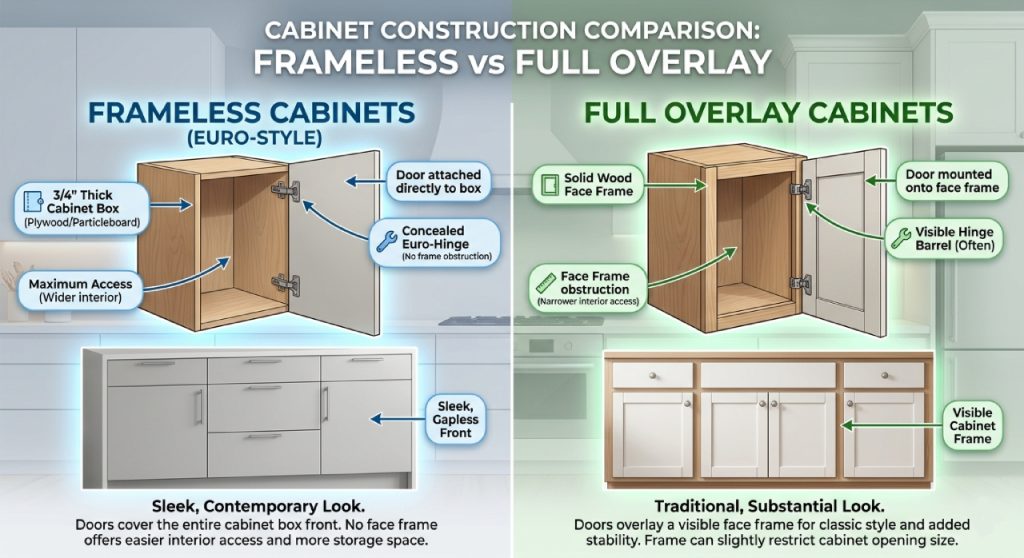 frameless-vs-full-overlay-cabinets
1. Construction & Design
Frameless cabinets are built without a face frame, while full overlay cabinets use a framed structure with doors covering most of the frame.
This difference impacts both appearance and performance.
2. Storage & Accessibility
Frameless cabinets provide slightly more usable space because there is no frame blocking the opening.
However, the difference is often minimal unless you are maximizing every inch of storage.
3. Durability
Full overlay cabinets generally have an advantage here. The face frame adds structural strength, making them more resistant to long-term wear and tear.
4. Aesthetics
Both styles offer a modern look, but frameless cabinets lean more toward ultra-minimalist design, while full overlay cabinets offer a slightly more refined and versatile appearance.
5. Cost
Frameless cabinets are typically more expensive due to construction complexity.
Full overlay cabinets tend to be more budget-friendly while still offering a premium look.
6. Installation
Frameless cabinets require more precise installation, as even small misalignments can affect door spacing.
Full overlay cabinets are more forgiving due to the presence of the face frame.
Which One Should You Choose?
Choose Frameless Cabinets If:
- You prefer a modern, European-style kitchen
- You want maximum storage access
- You’re willing to invest more for a sleek look
Choose Full Overlay Cabinets If:
- You want better durability and structure
- You prefer a balance between modern and traditional design
- You’re looking for better value for your budget
Real-World Insight
Many homeowners focus only on style but in daily use, durability and construction matter more.
Cabinets are opened and closed thousands of times over the years. Small differences in structure can lead to noticeable differences in performance.
👉 This is why many professionals recommend high-quality framed cabinets with full overlay doors for long-term reliability.
Where US Kitchen Cabinet Fits In
When comparing cabinet options, the most important factor isn’t just style—it’s how well the cabinet is built.
At US Kitchen Cabinet, the focus is on:
- Durable construction (including strong plywood options)
- Balanced design (modern + functional)
- Long-term value rather than short-term cost savings
Instead of choosing between “modern vs durable,” the goal is to provide cabinets that deliver both.
🚀 Final Verdict
There is no single “best” option for every kitchen—but there is a best option for your needs.
- Frameless cabinets are ideal for modern aesthetics and maximum access
- Full overlay cabinets are better for durability, versatility, and long-term value
👉 For most homeowners, full overlay cabinets offer the best balance of style, strength, and cost